
From a dentist's basement to half a trillion dollars and AI: Here's how memory manufacturer Micron Technology got there
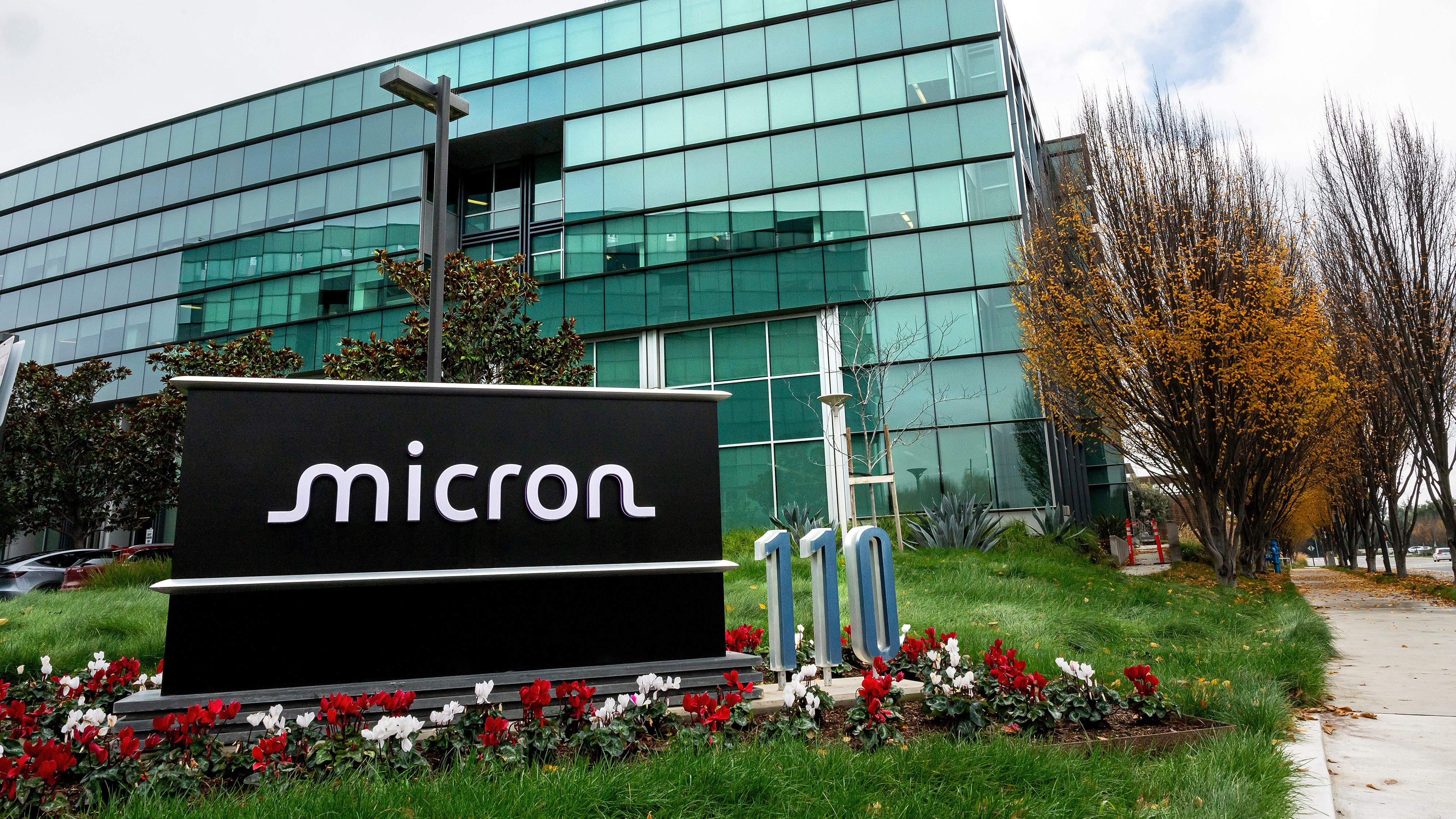
Samsung, TSMC, SK hynix, even Intel—you're likely already familiar with the usual suspects of semiconductor manufacturing. Micron Technology is far from an underdog running with this pack, having held a steady position as one of the top 10 leading semiconductor companies in the world for years now. In other words, it's a multibillion-dollar company—still headquartered in Boise, Idaho, in the United States.
Sure, Micron also has plenty of semiconductor fabs outside of the US; alongside facilities in Idaho and Virginia, it's also got chip fabrication plants in Singapore, Taiwan, China, and Japan, much like its competitors.
However, the company did just break ground on a massive new fab project in central New York earlier this year, likely as part of a bid to weather an extremely unpredictable tariff and international trade landscape. A report from CNY Central describes these planned four fabs as being the size of "ten football fields" once construction is complete years from now.
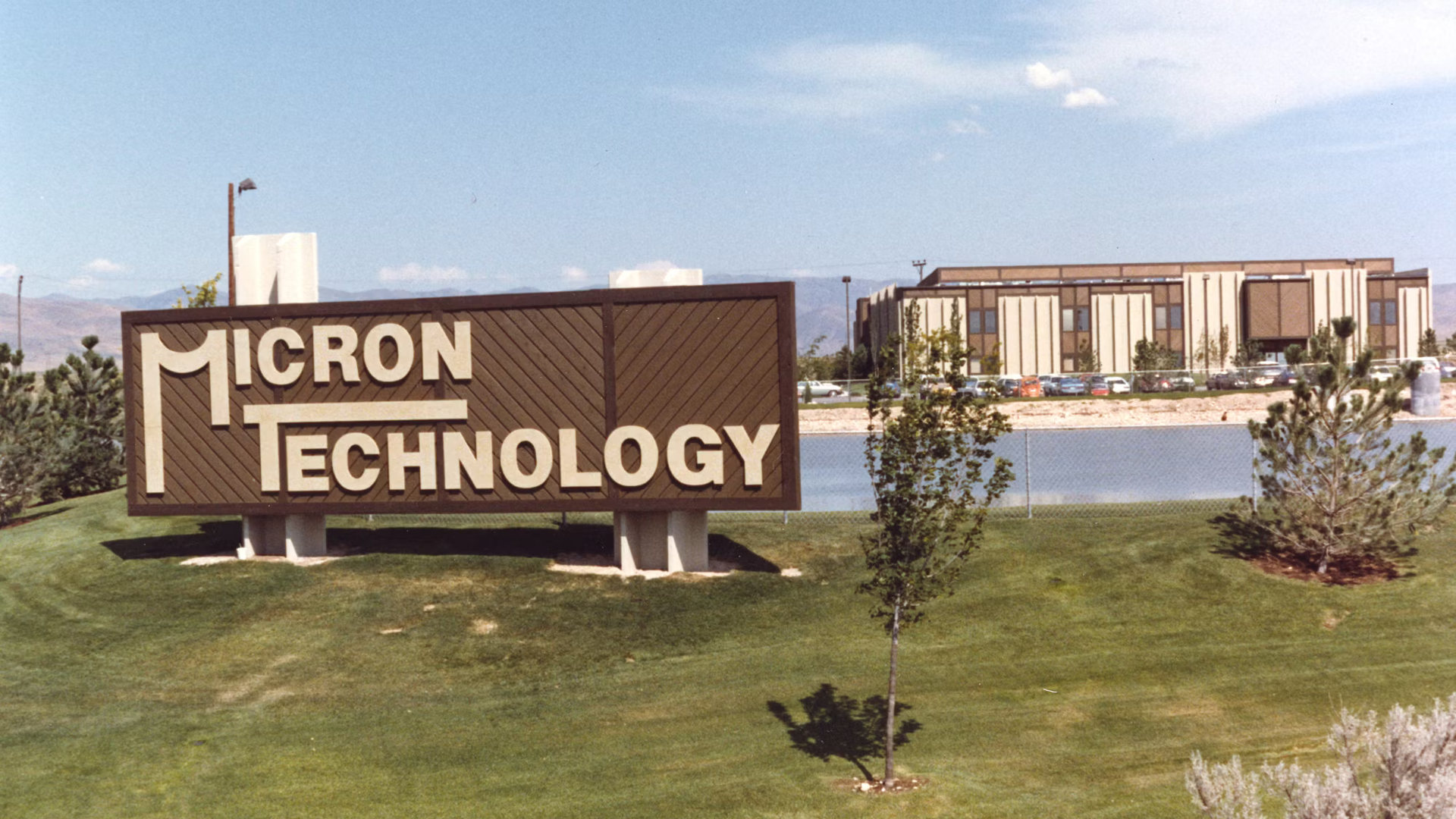
Even so, Micron's Idaho roots remain a wrinkle that begs the question: "What's the story there, then?" To boil it down to a single word: potatoes. But before we get to the spuds, let me rewind just a smidge. Micron's history begins in 1978 (for my goth friends, yes, that means the company is slightly younger than Anne Rice's 1976 novel, Interview with the Vampire).
Dennis Wilson, Doug Pitman, and twin brothers Joe and Ward Parkinson founded the company in a basement underneath a dentist's office. An Associated Press story written a few years later by Bob Fick recounts that Ward had previously worked for another semiconductor company based in Dallas, but when Ward looked to work for another company in 1978, the Dallas firm fought his departure.

Ward's brother Joe was already an established lawyer at the time, and so he helped fight the ensuing legal case. However, while the brothers eventually won, the entire episode soured Ward on both the original Dallas company as well as the job move to a new firm. So Ward decided to start his own DRAM company, winding down his own law practice to join his brother full-time at the freshly founded Micron Technology.
According to this more recent retrospective from the Idaho Statesman, Boise was not the brothers' first choice. Instead, Micron co-founder Doug Pitman was keen to leave Dallas and set up shop somewhere closer to his hometown of Idaho Falls. Soon after visiting Boise, Pitman struck a deal on the fateful basement under the dental practice.
Doug Pitman told Ward Parkinson that he felt so good about Boise that he bought a house there. Ward recalled his reaction to the Idaho Statesman in 1997, saying, "I almost died. There was my long pause. Then I said, ‘Well, I guess we’re going to Boise.’"
'Chip War: The Fight for the World's Most Critical Technology' by Chris Miller describes 1978 as "the worst possible time to start a memory chip company." This is because several Japanese companies had begun producing high-quality chips at an exceptionally low cost.
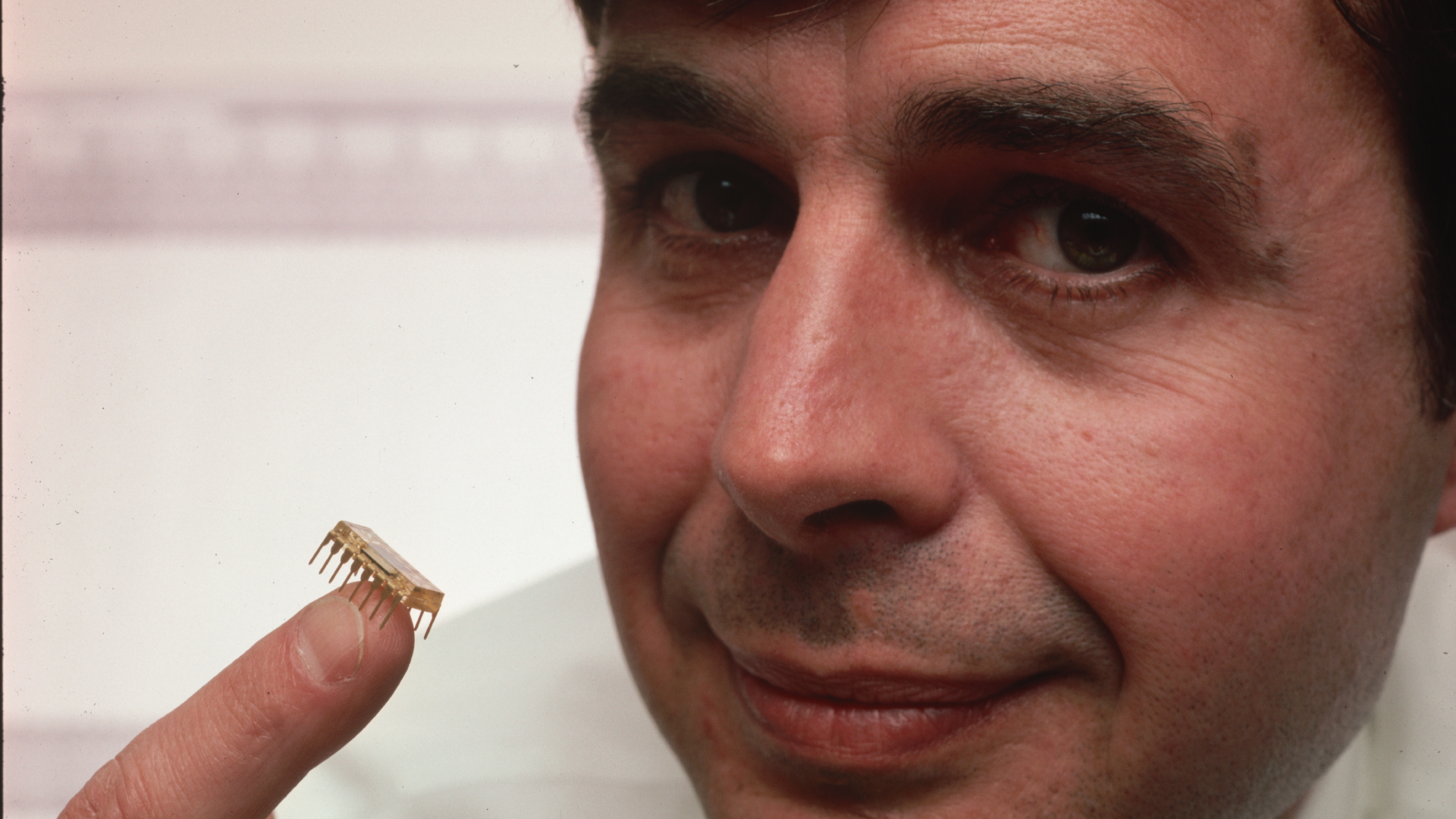
This landscape essentially doomed Micron's first contract to design a 64K DRAM chip for Mostek; Fujitsu cracked the chip first, Mostek went bust, and Micron's US customer base evaporated.
Thankfully, Micron Technology enjoyed early investment from local Boise businessmen, who in turn connected the founders with J.R. Simplot. Arguably, there wouldn't be Micron Technology as we know it today without Simplot's sizable investment of $1 million during the early '80s. The company went public in June 1984 with a 2.1 million share stock offering, selling at between $14 and $40 a share throughout the second half of that same year.
Chris Miller describes 1978 as "the worst possible time to start a memory chip company."
I personally quite enjoy Chris Miller's sassy summation of this period in Chip War: "As Japanese firms grabbed market share, CEOs of America's biggest chip firms spent more and more time in Washington, lobbying Congress and the Pentagon. They set aside their free-market beliefs the moment Japanese competition mounted, claiming the competition was unfair."
"As Japanese firms grabbed market share, CEOs of America's biggest chip firms spent more and more time in Washington, lobbying Congress and the Pentagon. They set aside their free-market beliefs the moment Japanese competition mounted, claiming the competition was unfair."
Chris Miller, 'Chip War: The Fight for the World's Most Critical Technology'
An accord was reached in September 1986, requiring Japanese manufacturers to stop selling chips at a price below the cost of what it took to make them. However, many major computer companies would go on to argue that the semiconductor trade agreement had not achieved its goals and had, in fact, driven the industry into a DRAM shortage by 1988.
At the time, Micron Technology and Texas Instruments were the only two US-based DRAM manufacturers that customers could buy from (IBM was making chips too, but solely for its own use).
The DRAM market was still deemed too capital-intensive to return to by other manufacturers, with many fearing that a sudden end to the shortage could leave them with a heap of chips they couldn't sell.
Micron had brought its 1 Mb DRAM to market only the year before, but this landscape proved exceptionally favourable for the company. For instance, Intel had already struck a deal to sell Micron's 256K chips under its own label, having left the DRAM market itself back in 1985. As such, rather than getting back into the game itself during the shortage, the company instead invested in Micron so it could expand its own production capacity.
Throughout this particular DRAM shortage, Micron was able to reverse its fortunes, making $16.9 million in the second quarter of 1988, compared to a $10.9 million loss in the second quarter of 1987.
Atari president Sam Tramiel accused Micron of "destroying the competitiveness of the American micro-computer business," after it not only failed to honour a telephone order of three million DRAM chips, but also then allegedly tried to sell the chips to Atari again at a higher price.
Simplot did not type or otherwise use a computer, despite his significant investments in Micron over the years.
Micron claimed the worldwide DRAM shortage was not only due to a shift in manufacturing after the introduction of the 1 Mb chip, but also increased demand. The more things change, the more they stay the same.
Anyway, by 1990, early investor J.R. Simplot held an almost 20% stake in Micron Technology. Unfortunately, the Parkinson brothers' relationship with the potato magnate became strained later that decade, leading to Joe being replaced by Steve Appleton as Micron CEO in 1994.
The reason why was unclear at the time, though 'J. R. Simplot: A Billion the Hard Way,' a biography written by Louie Attebery, frames it as a clash of personalities; Simplot allegedly disliked Parkinson's pessimistic communication to shareholders, and faulted Joe for selling his stock, while Parkinson reportedly feared Simplot shared insider information with "his buddies down at the Arid Club and perhaps Wall Street."
Parkinson allegedly issued Simplot with an indemnification document to curb this feared information leak, aiming to "'defend, hold harmless, and indemnify Micron' should he break the agreement", and apparently, Simplot did not like that at all.
Steve Appleton first joined Micron in 1983 as production staff, working up the ranks through multiple roles until Simplot made him CEO of the company in 1994, when he was just 34 years old.
Appleton's tenure began strongly, entering mid-way through a two-year period where the company's sales had more than tripled. This was in part due to personal computer sales in the US reaching 50 million units by the end of 1994. Riding such a high, Micron looked to expand and considered 13 different sites around Idaho and Washington for another chip fab.
Thankfully, no one was hurt, but the assailant left a note suggesting that the director should "find another job, maybe with Micron in Boise."
Twin Falls was one such contender, with one resident reportedly making their displeasure known by firing three shots through the office window of the then executive director of the Chamber of Commerce. Thankfully, no one was hurt, but the assailant left a note suggesting that the director should "find another job, maybe with Micron in Boise."
For some Pacific Northwest communities, chip fabs were not dissimilar to the data centres of their day, guzzling water and energy in exchange for promised job opportunities. Indeed, Micron was keen to build outside of its base in Boise in order to avoid placing further stress on the city's infrastructure. The company ultimately chose to build its new chip plant in Lehi, Utah.
There is an ironic wrinkle to these early years in Appleton's career as CEO. Namely, he was fired in January 1996 for allegedly selling his shares when the company's stock value was falling, much like Joe Parkinson before him. Fears that someone was shorting Micron stock fueled the decision. However, Appleton denied selling any shares in recent years, and was ultimately rehired eight days later.
In 1998, the company bought the entire memory chip operations of its leading US-based competitor, Texas Instruments. This involved taking on a reported $800 million of the Dallas-based company's debt, despite Micron itself reporting a $106.1 million third-quarter loss that same year.
In a 1999 Associated Press story titled 'Secret of Long Life? Maybe it's potatoes,' Simplot mused to reporter Kristen Moulton, that he wanted to personally visit the chip plants in Italy and Singapore Micron got as part of the deal before he retired. This same story claims that Simplot did not type or otherwise use a computer, despite his significant investments in Micron over the years. J.R. Simplot passed away in 2008.
The turn of the millennium saw Micron bringing years of losses to an impressive close; while it had lost $300 million cumulatively over the last 24 months, Micron made $341 million in the first quarter of fiscal year 2000. Steve Appleton took home $42.8 million dollars in pay by the end of the calendar year, apparently four times more than what he was paid in 1999.
But by now, the industry's boom-bust cycle was well established: shortages would stoke massive manufacturer profits, which those companies would then use to increase production capacity, which eventually led to an oversupply of chips, and then massive financial losses as a result. Throw multiple historic economic downturns into the mix, and Micron had to tighten its belt.
By the end of 2002, the company was $315.9 million in the red. In 2003, Micron cut the pay of its top executives, including Appleton, with the CEO having refused pay for at least 15 months already by February. That was when the company also cut 10% of its global workforce, though Appleton assured that layoffs would be 'proportional' across the corporate structure. It was only the second round of lay-offs the company had ever had.
But 1,000 more lay-offs followed in 2007. The situation did not improve the following year, with a decline in DRAM demand leading to a further 1,500 job cuts announced amid the 2008 financial crisis. The bulk of these job losses were localised to Boise. In 2009, Appleton then closed the manufacturing fabs that remained in Treasure Valley, though the company remains headquartered in Boise to this day.
Appleton served as Micron CEO until he died in a plane crash in 2012. Company co-founder and president Mark Durcan took over as interim CEO. In the interest of continuity, it was quickly decided that Durcan would be a permanent replacement, despite having announced plans to retire months before Appleton's tragic passing.
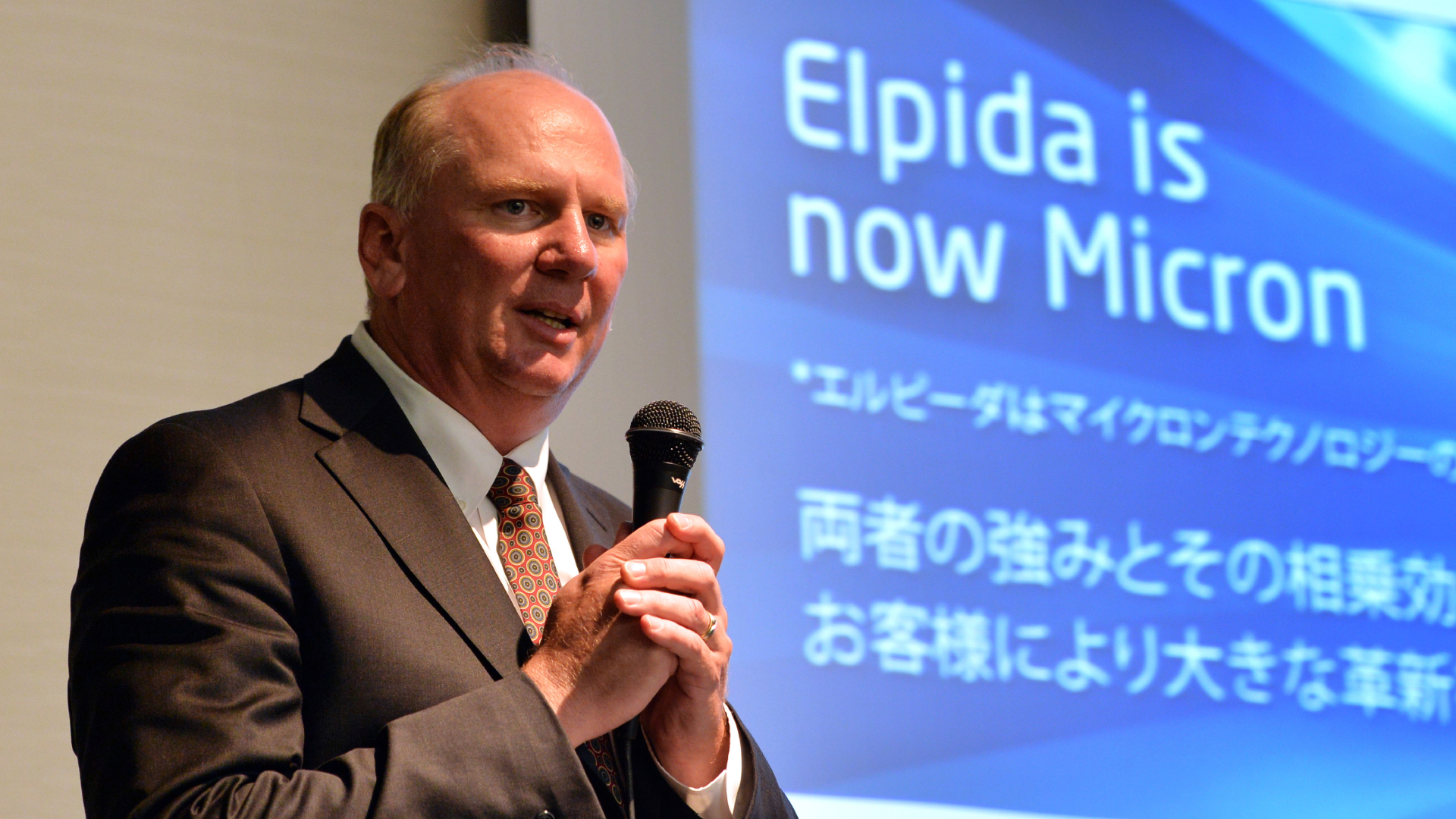
Durcan stewarded the company for the next five years, overseeing the acquisition of Japan’s Elpida Memory Inc., Taiwan’s Rexchip Electronics Corp and Inotera Memories, plus the opening of a fresh chip fab in Singapore. When Durcan retired in 2017, the founder of Sandisk, Sanjay Mehrotra, took over as Micron CEO. The company sold stock at a 15-year high of $42 per share.
The next few years saw several technological advancements from Micron. These great strides include the development of 3D QLC NAND flash memory for datacentre SSDs in 2018, and by now we're some ways down that particular enterprise-focused track.
I could reference Micron's 2025 shuttering of its consumer-focused Crucial brand, though reports that the company has completely left the consumer memory market are perhaps premature (and the PCIe 6.0 SSD it introduced last year also looks very swish).
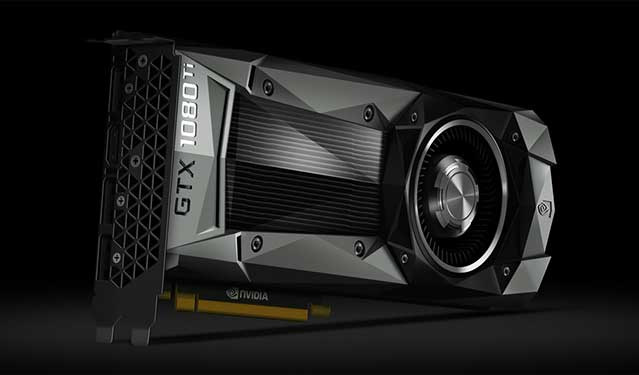
In terms of PC gaming, Micron has often led the way on GDDR development. For example, it created GDDR5X in 2016, which would be exclusively used in some GeForce GTX 10-series graphics cards, before going on to develop GDDR6X in collaboration with Nvidia.
This discrete graphics memory solution, which debuted in the GeForce RTX 3090 and the GeForce RTX 3080 graphics cards in 2020, offered significant gains in speed and power efficiency over GDDR6. And while it wasn't first to market with the even-faster GDDR7, it's enjoyed a continued partnership with Team Green for the RTX 50-series.
But anyway, let's bring things back to CHIPS. No, I'm not squandering this full circle moment on potatoes—I'm talking specifically about the 2022 CHIPS and Science Act ('CHIPS' standing for 'Creating Helpful Incentives to Produce Semiconductors').
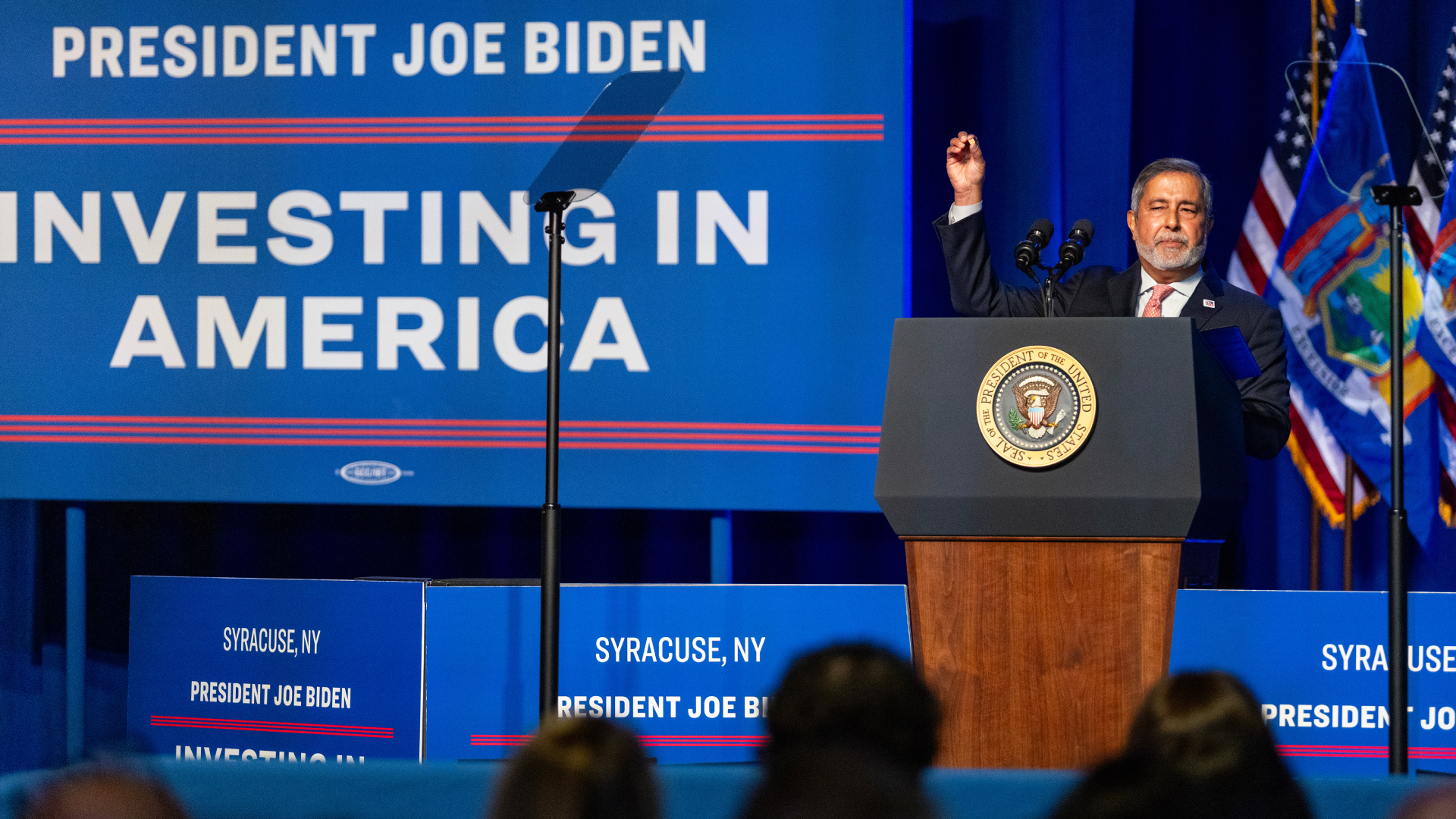
In short, the act invested $53 billion in US-based semiconductors and science businesses, such as Micron. In turn, Micron planned to invest $40 billion over the next eight years into manufacturing more chips within the US, which does take us back neatly to the new fab project in New York.
On top of those four fabs, Micron aims to further bolster US-based semiconductor supply by also building "two leading-edge high-volume fabs" in—you guessed it—Idaho.
But in case you've been luxuriating under a cool mossy rock, we are once again in the midst of a memory supply crisis, one which Micron itself isn't confident will end before next year. For starters, all of its US-based fabs will take time to get up and running. Earlier this year, Micron also signed a deal to acquire a chip foundry in Taiwan for $1.8 billion—though that likely won't ease the current memory shortage until 2027 at the earliest.
With such a long history, Micron has seen this boom-bust cycle many times before—but 2027 still feels like an awfully long way away.
Post a Comment