
'Reinventing the PC' is the concept Nvidia wanted to get across this Computex, but I'm not sure the AI room is being read

This month I've been: Covering all the biggest Computex 2026 releases in our liveblog. Also listening to far too much metal on the Audeze Maxwell 2 while I write. Mmm, planar magnetic drivers.
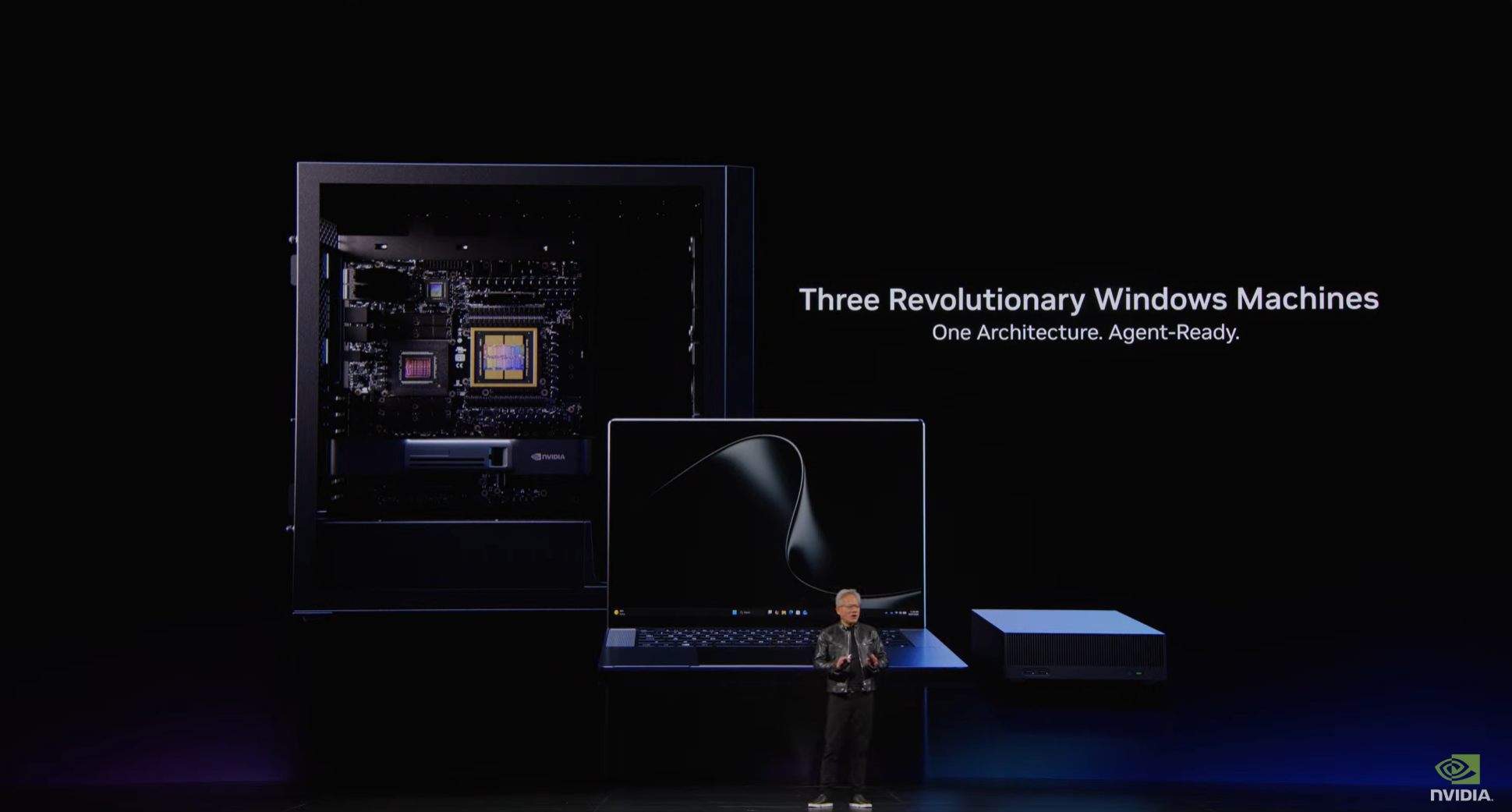
One concept was continually repeated by Nvidia at Computex 2026, and it's this idea of "reinventing the PC." The phrase has been used in reference to the company's RTX Spark SoC—powering "the world’s first Windows PCs purpose-built for personal agents"—and from a hardware perspective, it's an interesting bit of kit.
However, Nvidia CEO Jensen Huang went further into the "reinvention" of the PC at a Q&A session later in the show. "Your personal computer is really the world's largest edge device, and it's 40 years old," said the Nvidia chief. "And [it] has to be reinvented for agentic systems…. just like we have to reinvent the car."
Huang then used an example of modern autonomous cars as edge devices, while satellites "put intelligence in the sky." Later, the Nvidia chief had this to say about the future of the PC platform as a whole:
"Our computer sits at our desk waiting for us to use it. In the future, when we leave it… we're talking with it all the time," said Huang.
"I'll be chatting in WhatsApp with my agent, and it's doing stuff... and my agents are going to have names, and they're on my WhatsApp, and we're just chatting all the time. I'll be talking to it, and it's going to be talking back. It'll call me."
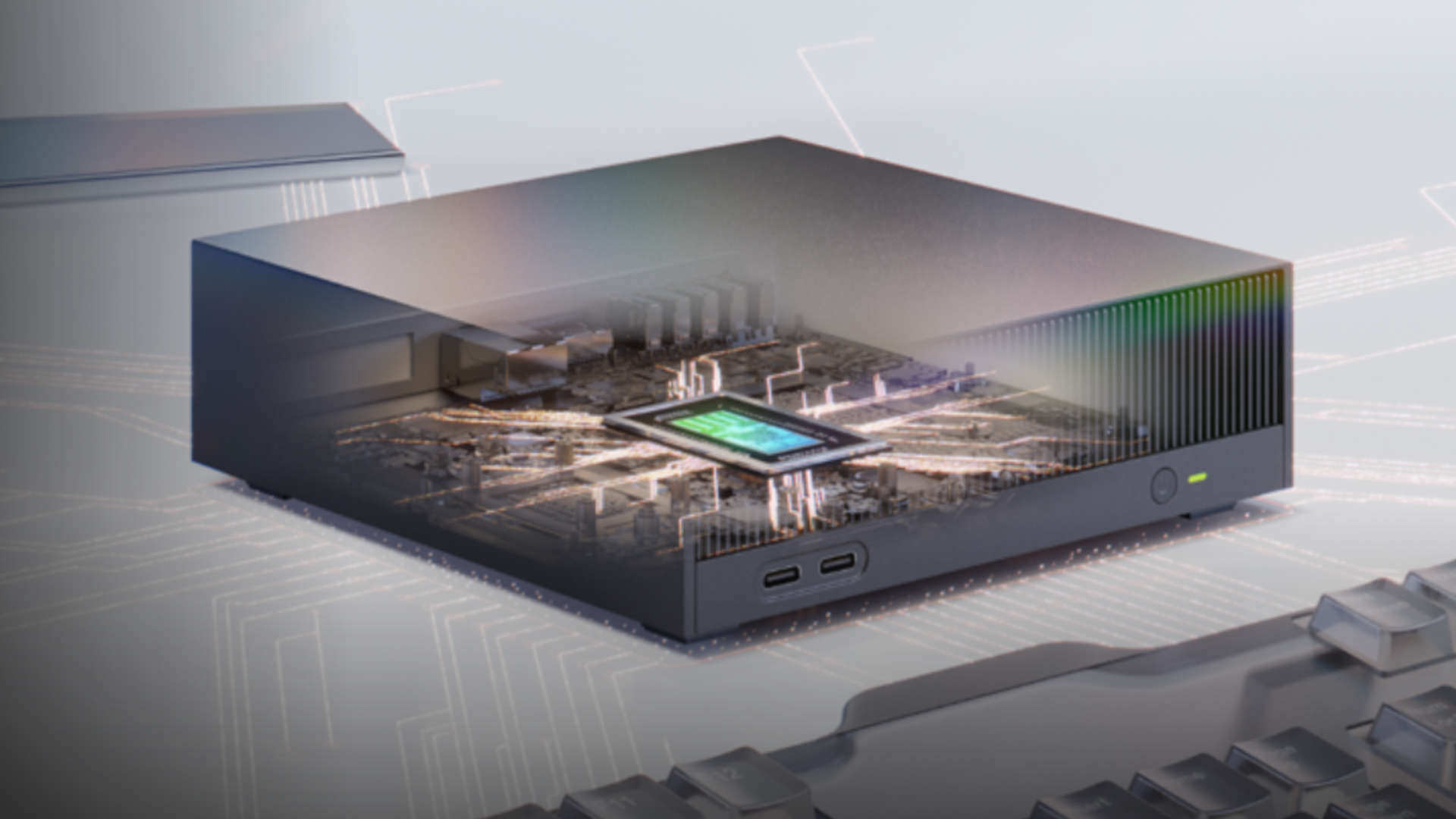
"That is the personal computer future. Tell me that's not R2-D2. Tell me that's not robotics. Tell me that's not cool," Huang continued. "I believe that many, many people will have this at home, just like they have a car at home. Soon, the agent is going to be so valuable to you, you want it to be sitting in a nice box, sitting in a nice computer, secure, performant, something you could carry with you, something you would use for a long period of time."
That's a nice sci-fi-style piece of imagery. Who among us hasn't imagined the idea of the ever-present "computer" (summoned with a cut-glass British accent, of course), working away in the background to not just respond to our commands, but to intelligently work with us to satisfy our needs, even at great distances?
"It's an agentic computer. It's an agent now, it's an assistant, not a tool. And that's the big idea"
Nvidia CEO Jensen Huang
The problem, however, is when that thinking runs into the cold, hard wall of reality—and all the extra consequences that entails. As things stand, our PCs are enablers of our own intelligence in a relatively direct way. We input commands, the computer responds. We control the machine, to a considerable degree. We are the agent.
But transforming our PCs into something with more agency, more AI-handled tasks, strikes me as risky business. It's putting the user further away from the machine, and letting AI do much of the heavy lifting instead. And in a world where concerns around the wider scope of the tech are well-publicised, this sort of AI-first thinking seems like a misread of the public perception surrounding it.
It reminds me of a joke/meme I read a long time ago, which I'll reprint here:
"Tech enthusiasts: Everything in my house is wired to the Internet of Things! I control it all from my smartphone! My smart house is Bluetooth-enabled, and I can give it voice commands via Alexa! I love the future!
Programmers/Engineers: The most recent piece of technology I own is a printer from 2004, and I keep a loaded gun ready to shoot it if it ever makes an unexpected noise."
AI is far from perfect. And while it continually improves, the level of public trust around it seems shaky at best. We continually read stories of AI deleting work, breaking existing systems, and hallucinating. It can also be manipulated, sometimes with surprising ease. In this upcoming agentic AI PC world, can we really trust it to integrate itself so smoothly into our digital lives? And more crucially, do we want it to?

Looking at the wider picture of public perspective around AI, the temperature seems to be rising. Students are actively booing speakers who tell them about the wonderful AI future they're walking into.
Microsoft's head of AI, meanwhile, has expressed puzzlement around negative reactions towards the tech, while the company itself is in the process of scaling back AI integration into Windows 11 features, after complaints that the operating system wasn't focusing on the fundamentals. Which are, of course, the traditional functions of your PC.
Will I be writing about how awesome my new agentic AI PC is in future? Will I even, thanks to AI, be writing about anything at all?
Personally, I like the fact that my PC is a box that I control directly, not an AI agent platform I work with from afar. It makes me feel empowered. And while there are already lots of unseen processes running under the hood to make that happen for me, I'm not sure a swarm of AI agents will improve the experience.
"We're now reinventing the computer. It's an agentic computer. It's an agent now, it's an assistant, not a tool. And that's the big idea," says Huang. That's a shame. I like tools. They enable me, a human being, to directly express myself. Agentic AI assistants handling many tasks for me, reducing my primary role to some sort of bizarre conductor, though? Is this really what we, the end users, want?

Nevertheless, the artificial intelligence beast continues to spread its tentacles into our daily lives, and we're often told that if we don't get on board with the tech, we're going to be left behind. Don't worry, though. It's a good thing. Agentic AI will make our lives better, and soon we'll all… I don't know. Have more time to go to the beach, or something.
I guess I'll believe it when I see it. But it's difficult not to feel that, as end consumers, we don't really have much of a choice as to how our technological future develops. Our brave new AI-dominated world looks to be coming for us whether we like it or not, and we'd better hope it's everything that was promised. Will I be writing about how awesome my new agentic AI PC is in future? Will I even, thanks to AI, be writing about anything at all?
I've no idea, but it doesn't feel great. How about you?
Post a Comment